Get Marketing Insights First
Subscribe to receive actionable strategies, growth tips, and industry insights delivered straight to your inbox.

What if paying a credit card bill could become a rewarding experience instead of a monthly chore? CRED proved that even an ordinary financial habit can inspire a billion-dollar startup. Discover how bold thinking, customer trust, and long-term vision transformed a simple idea into one of India’s leading fintech success stories.
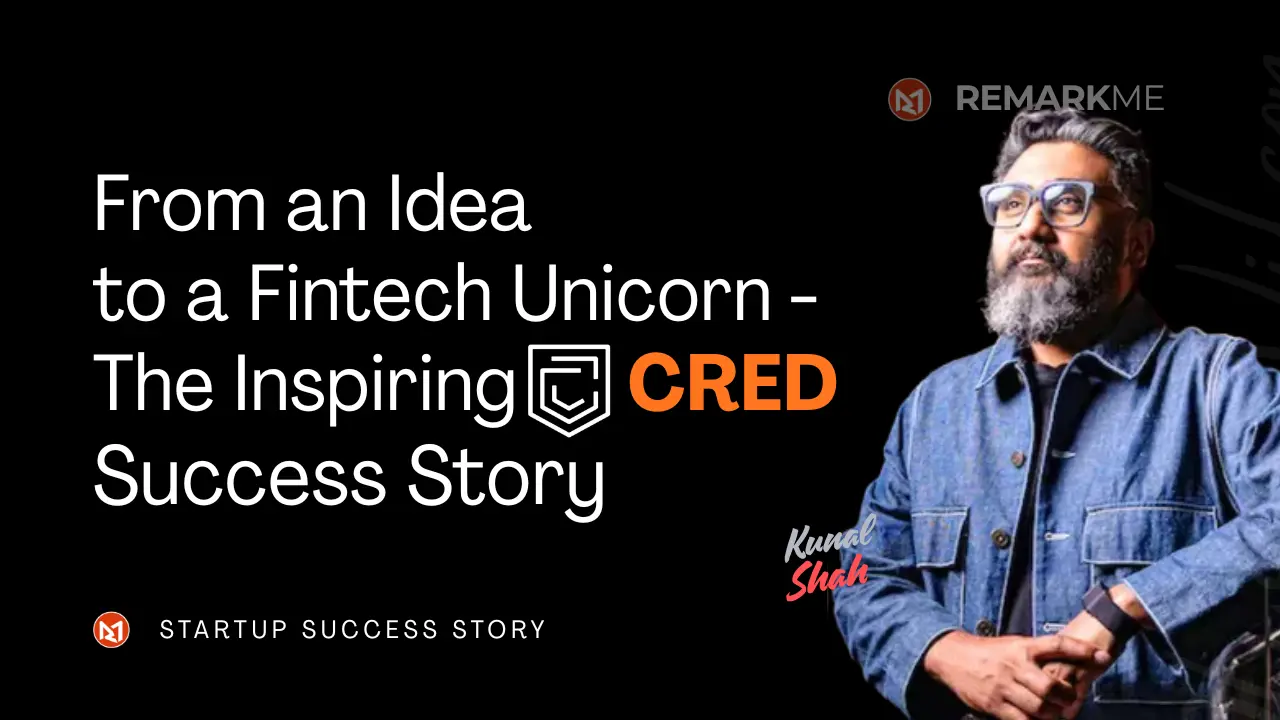
Before CRED became one of India’s most recognized fintech startups, paying a credit card bill was nothing more than a monthly responsibility. Most people treated it like another task on their to-do list. They logged into their banking app, made the payment, and moved on with their day.
Banks certainly offered rewards, cashback, and loyalty points. However, these benefits were often confusing and difficult to redeem. Many users never fully understood how their reward programs worked, while others simply ignored them because the value felt too small.
At the same time, India’s digital payment ecosystem was expanding at an incredible pace. More people were using smartphones, online shopping was becoming a daily habit, and credit card adoption was steadily increasing among urban consumers. Yet one important question remained unanswered.
Why wasn’t anyone recognizing people who consistently managed their credit responsibly?
Every month, millions of users paid their credit card bills on time. They maintained healthy credit scores, avoided unnecessary debt, and practiced good financial discipline. Despite being some of the most trustworthy customers in the financial system, they rarely received meaningful appreciation for their behavior.
This overlooked group represented more than just responsible borrowers. They were financially aware individuals who valued quality, reliability, and trust. Yet no company had built an experience specifically around them.
Most fintech companies were busy solving problems like digital payments, money transfers, or instant lending. These were important innovations, but nearly everyone was competing for the same audience using similar strategies. Discounts became bigger, cashback offers became more frequent, and customer acquisition turned into an expensive race.
In that crowded market, it became increasingly difficult for any startup to stand out.
Sometimes, the biggest opportunities don’t come from solving obvious problems. They come from noticing small frustrations that everyone has quietly accepted. Paying a credit card bill wasn’t difficult, but it was completely forgettable. There was no excitement, no sense of achievement, and no reason for users to feel valued after doing the right thing.
That simple observation revealed an opportunity hiding in plain sight.
What if paying a credit card bill could become more than just a transaction?
What if responsible financial behavior could earn recognition instead of being taken for granted?
Those questions challenged the traditional way financial services rewarded customers. Instead of focusing only on spending more, a startup could celebrate people for managing their money wisely.
It was an unconventional idea. Many people might have overlooked it because the problem didn’t seem urgent. Yet history has shown that some of the world’s most successful startups are built by reimagining everyday experiences rather than inventing entirely new ones.
This was the gap that would eventually inspire CRED. Instead of asking how to process another payment, the company would ask a far more meaningful question.
How do you make people feel rewarded for doing the right thing?
Every successful startup begins with an idea, but behind that idea is usually someone who sees the world differently. For CRED, that person was Kunal Shah.
Long before CRED became a household name in India’s startup ecosystem, Kunal had already experienced the highs and lows of entrepreneurship. He was known for building FreeCharge, a digital payments platform that made mobile recharges simple and rewarding. In 2015, FreeCharge was acquired by Snapdeal in one of India’s biggest startup deals at the time.
For many entrepreneurs, such an exit would have marked the end of their startup journey. Kunal, however, saw it as the beginning of a new chapter.
Instead of rushing to launch another company, he spent time observing how people made financial decisions. He spoke with founders, investors, industry experts, and consumers. More importantly, he paid attention to human behavior.
During this period, one insight became impossible to ignore.
People rarely make decisions based only on logic. They are influenced by emotions, habits, identity, and the desire to belong. A product may solve a practical problem, but it becomes memorable when it also creates a meaningful experience.
This way of thinking changed how Kunal looked at financial services.
Most fintech companies were competing by offering faster transactions, bigger discounts, or lower fees. These features were valuable, but they were also easy for competitors to copy. Kunal believed that lasting businesses are built on something much harder to replicate—customer trust and emotional connection.
He began asking questions that many others overlooked.
These questions slowly shaped the foundation of a new startup.
Rather than building another payment application, Kunal imagined a platform that recognized responsible financial behavior. The goal was not simply to help people pay their bills. It was to create an experience that made users feel valued every time they demonstrated good financial habits.
It was an unusual idea.
Most startups try to attract as many customers as possible from day one. Kunal was considering the opposite approach. Instead of serving everyone, he wanted to build for a specific group of people who shared one important characteristic—they consistently managed their credit well.
Many observers believed this strategy would limit the company’s growth. After all, why would a startup deliberately reduce its potential customer base?
Kunal believed the opposite.
If you deeply understand one group of customers and earn their trust, growth becomes stronger and more sustainable than trying to please everyone at once.
This philosophy would soon become one of CRED’s biggest strengths. The company wasn’t preparing to compete on price or discounts alone. It was preparing to build an exclusive community where responsible financial behavior earned recognition, rewards, and a sense of belonging.
That bold decision would set CRED apart from almost every other fintech startup in the market.
When CRED officially launched in 2018, it didn’t try to attract every credit card user in India. That decision surprised many people.
Most startups dream of reaching millions of customers as quickly as possible. They invest heavily in advertising, offer generous discounts, and remove every possible barrier to signing up. Growth is often measured by one simple number—the more users, the better.
CRED chose a very different path.
The platform was available only to people with a high credit score. If a user’s credit score didn’t meet the required standard, they couldn’t become a member.
At first glance, the strategy seemed risky.
Why would a startup intentionally say “no” to thousands of potential users? Wouldn’t limiting access slow down growth?
These were reasonable questions, and many people in the startup ecosystem raised them. Some even believed that CRED’s approach was too exclusive to succeed in a country as diverse as India.
But Kunal Shah wasn’t trying to build just another fintech app.
He wanted CRED to feel like a trusted community rather than a utility. Membership wasn’t meant to be automatic. It had to feel earned.
That small difference changed how people perceived the brand.
Instead of asking, “What does this app do?” many people began asking, “Why can’t everyone join?”
Curiosity spread quickly.
People started discussing CRED with friends, colleagues, and family members. Social media conversations increased, and invitations became something users genuinely wanted. Without spending heavily on traditional marketing during its early days, CRED had created something powerful—people were talking about the product because they wanted to understand it.
Exclusivity became one of the company’s strongest marketing tools.
For those who qualified, joining CRED felt like entering a community that appreciated financial responsibility. Paying a credit card bill was no longer just another monthly task. It became part of an experience designed around recognition and rewards.
This approach also helped CRED understand its users better.
Its members generally had strong repayment habits, stable financial profiles, and higher purchasing power. By serving a focused audience first, the company could learn faster, improve its product, and introduce features that genuinely matched customer needs.
Many successful startups begin by solving one problem for one specific group of people before expanding further. CRED followed the same principle.
Instead of trying to be everything for everyone, it focused on becoming exceptional for a smaller audience. That clarity gave the company a strong identity from the very beginning.
As trust grew, so did the opportunities.
Premium brands wanted to partner with CRED because its members represented a valuable customer segment. Exclusive offers, curated experiences, and carefully selected rewards started appearing on the platform, making membership even more attractive.
A simple credit card payment app was slowly transforming into a premium lifestyle ecosystem.
For aspiring founders, this phase of CRED’s journey offers an important lesson.
Growth isn’t always about reaching the largest audience first. Sometimes, creating genuine value for a well-defined community can build stronger loyalty than trying to serve everyone at once.
CRED proved that when people feel they belong to something meaningful, they don’t just use the product—they become its biggest advocates.
That loyal community would soon help the company turn an ordinary monthly payment into an engaging habit, opening the door to the next stage of CRED’s remarkable growth.
Building an exclusive community was only the first step. The real challenge was giving members a reason to return every month.
Most payment apps become useful only when users need them. Once a transaction is complete, people close the app and forget about it until the next payment is due. CRED wanted to change that behavior.
Instead of treating bill payments as a routine financial task, the company looked at them as an opportunity to create a memorable experience.
Every time members paid their credit card bills through CRED, they earned CRED Coins. These digital rewards could be redeemed for exclusive offers, premium products, curated experiences, and discounts from carefully selected brand partners.
The rewards were intentionally different from traditional loyalty programs.
Rather than offering generic cashback or points with limited value, CRED partnered with premium brands in categories like travel, dining, wellness, fashion, and technology. Members often discovered offers they genuinely wanted instead of rewards they would never use.
This made the experience feel more personal.
Over time, paying a credit card bill became more than checking off a monthly responsibility. It became a moment of anticipation. Users looked forward to seeing what rewards they had earned and which new experiences were available.
Behind this simple idea was a deep understanding of human behavior.
People appreciate recognition. Even small rewards can reinforce positive habits when they arrive at the right time. By celebrating responsible financial behavior, CRED encouraged users to continue paying their bills on time.
The company wasn’t trying to change people’s financial responsibilities. It was changing how those responsibilities felt.
CRED also invested heavily in creating a polished user experience.
The app featured clean visuals, smooth animations, and an intuitive interface that made every interaction effortless. From bill reminders to payment confirmations, every detail was designed to feel premium and reassuring.
For users, this attention to detail created confidence.
For founders, it highlighted an important lesson.
A product doesn’t always need dozens of features to stand out. Sometimes, the difference comes from executing one experience exceptionally well. When customers enjoy using your product, they are far more likely to return and recommend it to others.
As CRED’s member base grew, its ecosystem became even stronger.
More premium brands wanted to collaborate because they could reach an audience known for financial responsibility and higher purchasing power. These partnerships expanded the range of rewards available, making the platform increasingly valuable for both members and businesses.
It became a cycle that benefited everyone involved.
Members received better experiences, partner brands gained access to a trusted customer base, and CRED strengthened its position in the fintech market.
What began as a simple idea to reward timely credit card payments was evolving into a platform where finance, lifestyle, and premium experiences came together.
For aspiring founders, this stage of CRED’s journey offers a valuable reminder.
Customers rarely remember every feature a product offers. They remember how the product makes them feel. By combining thoughtful design, meaningful rewards, and an understanding of human psychology, CRED transformed an ordinary monthly task into an experience people genuinely looked forward to.
That ability to create memorable experiences would soon be amplified by another powerful advantage—marketing that was impossible to ignore.
Building a great product is important, but people first need a reason to notice it.
By the time CRED had established a loyal community of members, it faced another challenge. It needed to introduce its brand to a much larger audience without losing its premium identity.
Many startups solve this problem by highlighting product features.
They talk about lower prices, faster services, or better technology. While these messages can attract attention, they often sound similar because competitors make the same promises.
CRED decided to tell a different story.
Instead of focusing only on credit card payments or rewards, the company invested in creative advertising that entertained people. Its campaigns were humorous, unexpected, and memorable, making viewers curious about the brand behind the commercials.
One of the biggest turning points came during the Indian Premier League (IPL).
Millions of people tuned in to watch cricket, but many found themselves talking just as much about CRED’s advertisements. The campaigns featured well-known personalities in surprising roles, using self-deprecating humor and storytelling that felt fresh rather than promotional.
People laughed, shared the ads on social media, and discussed them with friends.
Interestingly, many viewers didn’t immediately understand what CRED actually did. Yet they remembered the brand’s name.
For some businesses, that might seem like a problem. For CRED, it became an advantage.
Curiosity encouraged people to search for the company, visit its website, and explore the app. Instead of forcing a sales message, CRED sparked conversations. Those conversations generated awareness that traditional advertising often struggles to achieve.
The company also remained consistent in its branding.
Whether someone watched an advertisement, opened the app, or visited the website, they encountered the same premium experience. The design, language, and overall tone reflected sophistication without feeling intimidating.
That consistency helped build trust.
Customers often judge a company within seconds of interacting with it. When every touchpoint delivers a similar experience, the brand becomes easier to remember and more reliable in the minds of users.
CRED also understood that not every marketing campaign needs to explain every product feature.
Sometimes the goal is to make people feel something.
A smile, a moment of surprise, or a sense of curiosity can create a stronger connection than a long list of specifications. Once that emotional connection exists, people become far more willing to learn about the product itself.
This approach reflected a broader lesson about modern branding.
People are surrounded by advertisements every day. Most of them are forgotten within minutes because they blend into the background. Brands that dare to be different have a better chance of earning attention without shouting louder than everyone else.
For aspiring founders, CRED’s marketing journey offers an important takeaway.
Marketing is not just about spending more money. It is about creating stories that people genuinely want to watch, remember, and share. When your brand becomes part of everyday conversations, every satisfied customer can become an ambassador who spreads your message naturally.
CRED’s bold campaigns turned a fintech startup into one of India’s most recognizable consumer brands. But with growing popularity came growing expectations. Investors, customers, and industry experts all began asking a difficult question.
How would CRED turn its rapidly expanding ecosystem into a sustainable long-term business?
That question would lead the company into its next and perhaps most challenging phase.
Every successful startup reaches a point where excitement is replaced by difficult questions.
For CRED, that moment arrived as the company grew rapidly. Its user base expanded, its brand became widely recognized, and investors showed strong confidence in its long-term potential. At the same time, industry experts began asking an important question.
Could CRED build a profitable business while maintaining its premium experience?
It was a fair concern.
Rewarding users, creating memorable marketing campaigns, and building a polished product required significant investment. As the company continued to grow, many observers wondered how these efforts would translate into sustainable revenue over time.
Unlike traditional businesses that generate income from straightforward product sales, fintech companies often follow a longer path. They first focus on earning customer trust and engagement before introducing additional financial services that can create long-term value.
CRED believed that trust was its strongest asset.
If users consistently relied on the platform to manage their financial lives, the company would have opportunities to offer products and services that matched their needs. Building that relationship, however, required patience.
The startup also faced criticism for serving only a limited segment of customers.
Some people argued that its focus on users with strong credit scores made the platform too exclusive. Others questioned whether such a strategy could succeed in a country where millions of people were only beginning their credit journeys.
CRED listened to the feedback but stayed committed to its vision.
The company believed that solving one problem exceptionally well was more valuable than trying to solve every problem at once. Instead of changing direction every time criticism appeared, it continued improving the experience for the audience it understood best.
Competition created another challenge.
India’s fintech ecosystem was evolving quickly. New startups entered the market, established financial institutions launched digital products, and technology companies expanded into payments and lending. Customers suddenly had more choices than ever before.
Standing out became increasingly difficult.
CRED responded by focusing on innovation rather than imitation. Instead of competing only on cashback or discounts, it continued investing in design, customer experience, and carefully selected partnerships. The company understood that lasting brands are built through consistency, not short-term trends.
Rapid growth also brought higher expectations.
Investors expected strong execution. Customers expected new features. Partners expected meaningful business opportunities. Meeting all of these expectations at the same time required disciplined decision-making and constant improvement.
Despite the pressure, CRED continued moving forward.
Not every experiment succeeded, and not every decision pleased everyone. Yet the company showed a quality that many enduring startups share—the willingness to learn, adapt, and keep improving without losing sight of its original mission.
For aspiring founders, this stage of CRED’s journey offers one of the most valuable lessons of all.
Success does not eliminate challenges. In many ways, success creates bigger ones.
As your startup grows, people will question your strategy, compare you with competitors, and expect faster results. While constructive feedback is important, founders must also know when to stay committed to a vision they genuinely believe in.
CRED’s story reminds us that building a remarkable company is not about avoiding criticism. It is about responding to challenges with patience, learning, and a clear sense of purpose.
Those qualities gave CRED the confidence to think beyond credit card bill payments. The company was now ready to evolve into a broader financial platform, opening the door to entirely new opportunities for growth.
By this stage, CRED had achieved something many startups spend years trying to build.
It had earned the trust of a loyal community. Millions of members were already using the platform to pay their credit card bills, and many of them returned every month. That regular engagement gave CRED an opportunity to think much bigger.
The company asked an important question.
If members already trusted CRED with one part of their financial life, could the platform help them manage other financial needs as well?
Instead of remaining a single-purpose app, CRED began expanding its ecosystem.
One of the first steps was introducing services that made everyday financial activities more convenient. Members could pay house rent, access carefully designed financial products, and explore services that extended beyond monthly bill payments.
The idea was simple.
Rather than asking users to switch between multiple apps, CRED wanted to bring different financial experiences together in one trusted platform. Every new feature was designed to complement the existing experience instead of distracting from it.
The company also explored lending solutions through partnerships.
Unlike traditional lending models that often relied on lengthy paperwork and slow approval processes, CRED focused on making access to credit smoother for eligible members. Since many users already had strong credit histories, the platform could deliver a more personalized experience.
This approach reflected CRED’s broader philosophy.
Good financial behavior should open more opportunities, not just earn rewards.
As the ecosystem expanded, the company also introduced shopping experiences, exclusive brand collaborations, travel-related benefits, and premium lifestyle offerings. These additions were carefully selected to match the interests of its member community.
CRED was no longer just helping people pay bills.
It was becoming a platform where finance and lifestyle naturally came together.
This strategy also strengthened the business itself.
When a startup offers only one service, its relationship with customers can be limited. But when users regularly interact with different products within the same ecosystem, trust deepens, engagement increases, and the company gains more opportunities to create value over time.
Many of the world’s most successful technology companies have followed a similar path.
They begin by solving one specific problem exceptionally well. Once customers trust the brand, they gradually expand into related services without losing focus on the original mission.
CRED followed this principle with patience.
It didn’t attempt to launch every financial product at once. Instead, it expanded step by step, learning from customer feedback and refining each new offering before moving further.
For aspiring founders, this stage of the journey highlights an important lesson.
Growth is not about adding more features simply because competitors are doing so. Every expansion should solve a real customer need and strengthen the core product rather than weaken it.
A startup that grows without direction often becomes confusing.
A startup that grows with purpose builds a stronger ecosystem.
CRED’s evolution demonstrated the power of this approach. By expanding thoughtfully, the company increased the value it delivered to members while creating new opportunities for long-term growth.
Its vision had grown far beyond rewarding timely credit card payments.
The company was steadily building a connected financial ecosystem where trust, convenience, and premium experiences worked together. That long-term vision also helped explain why some of the world’s leading investors continued to place their confidence in CRED’s future.
As CRED expanded its ecosystem, one question continued to surface in discussions across the startup world.
Why were some of the world’s leading investors willing to place such high value on the company?
For many people, the answer wasn’t immediately obvious. They looked at traditional business metrics and wondered whether the company’s valuation reflected its current financial performance.
Experienced investors, however, often look beyond the present.
They try to understand what a business could become over the next five or ten years. Instead of focusing only on today’s numbers, they evaluate the strength of the company’s vision, its customer relationships, and its ability to create lasting value.
CRED had several qualities that attracted this kind of long-term thinking.
The company had built a trusted brand among financially responsible consumers. Its members were highly engaged, regularly returned to the platform, and interacted with more than just a single feature. That level of engagement is difficult to achieve and even harder for competitors to replicate.
Trust itself became a valuable asset.
In financial services, customers share sensitive information and make important decisions through digital platforms. Once a company earns that trust, it gains the opportunity to introduce additional products that naturally fit into customers’ financial lives.
Investors understood this potential.
Rather than seeing CRED as only a credit card bill payment app, many viewed it as a platform capable of growing into a broader financial ecosystem. If the company continued strengthening customer relationships, it could create multiple revenue opportunities over time.
The quality of CRED’s user base also played an important role.
Its members generally maintained healthy credit scores and demonstrated responsible financial habits. For businesses looking to reach this audience, CRED became an attractive partner. This created opportunities for brand collaborations, financial products, and services that aligned with the needs of its community.
Another factor was the company’s ability to stand out.
The fintech industry is highly competitive, with many businesses offering similar services. Yet CRED had built a distinct identity through thoughtful product design, memorable marketing, and a clear focus on rewarding financial discipline.
That differentiation gave investors confidence that the company wasn’t competing only on price or short-term promotions.
Of course, investing in startups always involves uncertainty.
Markets change, customer expectations evolve, and competition never stands still. Even the most promising businesses must continue adapting to remain relevant. CRED was no exception.
But successful investors understand that every great company goes through periods of experimentation before reaching maturity.
They often support founders who demonstrate clear thinking, resilience, and the willingness to solve meaningful problems over the long term. In CRED, many investors saw a leadership team focused on building an enduring business rather than chasing quick results.
For aspiring founders, this part of CRED’s journey offers an important perspective.
Funding is not simply about presenting impressive numbers. Investors also pay close attention to the quality of your customers, the strength of your brand, the size of the opportunity, and your ability to execute a long-term vision.
A startup that earns trust, solves a genuine problem, and continues learning can create value far beyond its first product.
CRED’s story shows that investors don’t just invest in what a company is today.
They invest in what they believe it can become tomorrow.
That belief, combined with years of disciplined execution, turned CRED into one of India’s most closely watched startups. Yet perhaps its greatest contribution lies not in its valuation, but in the lessons it offers to every aspiring entrepreneur who dreams of building something meaningful.
Every startup journey leaves behind lessons that go far beyond revenue, funding, or valuation. CRED’s story is no different. While the company continues to evolve, the principles behind its growth offer valuable insights for anyone dreaming of building a business.
Perhaps the biggest lesson is that great startups don’t always begin with complicated ideas.
CRED didn’t invent credit cards or digital payments. Instead, it looked at an everyday activity that millions of people had accepted as ordinary and asked a simple question: “Can this experience be better?” That willingness to question the obvious created an entirely new opportunity.
Another important lesson is the power of solving one problem exceptionally well.
In the early days, CRED didn’t try to become a complete financial platform overnight. It focused on rewarding responsible credit card users and refining that experience until people genuinely valued it. Only after earning customer trust did the company gradually expand into other services.
For aspiring founders, this is an important reminder.
Trying to solve every problem at once often leads to products that solve none of them particularly well. Building something meaningful usually starts with doing one thing better than anyone else.
CRED also proved that not every business needs to compete on price.
Many startups believe they must offer the biggest discounts or the lowest prices to attract customers. CRED chose a different path. It focused on quality, trust, thoughtful design, and memorable experiences. In doing so, it showed that customers are often willing to stay loyal to brands that consistently create value.
The company’s journey also highlights the importance of patience.
There were moments when people questioned its business model, debated its valuation, and wondered whether its strategy would succeed. Instead of reacting to every criticism, CRED continued improving its product and staying committed to its long-term vision.
Every founder will face doubts.
Some will come from competitors, some from customers, and some even from friends or investors. Listening to feedback is essential, but changing direction every time someone disagrees can prevent a startup from reaching its full potential.
Another lesson comes from the way CRED built its brand.
The company understood that products can be copied, features can be replicated, and prices can be matched. What is much harder to copy is the trust customers place in a brand and the emotional connection they develop over time.
That is why branding is not just about logos, colors, or advertisements.
It is about creating experiences that people remember long after they have closed the app or visited the website. Every interaction shapes how customers feel about a business, and those feelings often influence future decisions more than features alone.
CRED’s journey also reminds founders that growth should have a purpose.
The company didn’t add new services simply because they were popular. It expanded carefully, choosing products that strengthened its ecosystem and created additional value for members. That thoughtful approach helped the business grow without losing its identity.
Most importantly, CRED teaches us that opportunities often exist where others stop looking.
Many entrepreneurs chase crowded markets because they appear exciting. Yet some of the most successful companies are built by noticing overlooked problems that people quietly accept as part of everyday life.
For aspiring founders, that may be the most valuable lesson of all.
You don’t always need a revolutionary invention to build a remarkable startup. Sometimes, all it takes is a fresh perspective, a genuine understanding of your customers, and the courage to challenge assumptions that everyone else accepts.
CRED’s journey is far from over.
Like every ambitious startup, it continues to face new opportunities, changing market conditions, evolving customer expectations, and increasing competition. The future will bring fresh challenges, and its next chapter is still being written.
Yet one thing has remained constant since the beginning.
CRED didn’t build its success by following the crowd. It succeeded by identifying an overlooked opportunity, understanding human behavior, and creating an experience that made responsible financial habits feel rewarding instead of routine.
That is what makes CRED more than a fintech startup.
It is an example of how innovation often begins with curiosity rather than complexity. It shows that founders don’t always need to create something completely new. Sometimes, the greatest impact comes from reimagining something that already exists.
If you’re planning to start your own venture, remember that every successful company once began with a single observation and a single idea.
Ask better questions. Listen carefully to your customers. Stay patient when progress feels slow. Keep improving even when others doubt your vision.
The next great startup may not come from chasing the latest trend.
It may come from solving an everyday problem in a way that no one else has imagined.
And perhaps, one day, your startup success story will inspire the next generation of founders to believe that ordinary ideas can create extraordinary businesses.