Get Marketing Insights First
Subscribe to receive actionable strategies, growth tips, and industry insights delivered straight to your inbox.

A startup’s greatest achievement isn’t raising funding, it’s creating a legacy that lasts beyond its founder. Discover how Zivame entered a new chapter, became part of Reliance Retail, and left behind timeless lessons for every aspiring entrepreneur.
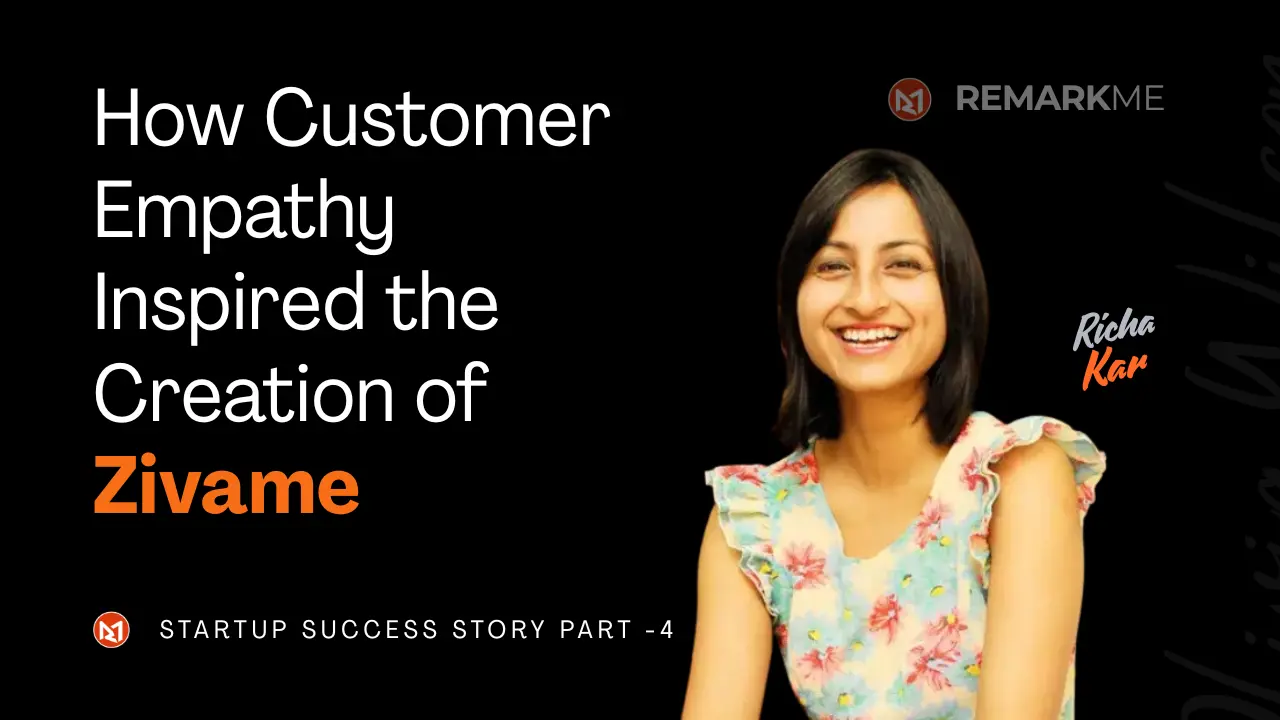
Building a successful startup is an extraordinary achievement. Keeping that startup relevant through changing markets, evolving customer expectations, and increasing competition is an even greater challenge.
By the late 2010s, Zivame had already rewritten the rules of India’s intimate wear industry. What began as an online platform solving an overlooked customer problem had evolved into one of the country’s most recognized women’s intimate wear brands.
The company had earned customer trust, attracted leading investors, expanded into physical retail, and built a strong omnichannel presence. Yet behind every growing business lies a difficult reality.
Markets never stop changing.
Neither can the companies that hope to lead them.
For Zivame, the next phase would require decisions that extended far beyond products or marketing. It would require leadership capable of preparing the company for an entirely new scale of growth.
Entrepreneurship often celebrates founders.
History, however, remembers institutions.
Richa Kar had spent years proving that Indian women deserved a better shopping experience. She had challenged industry assumptions, convinced investors to believe in an unconventional business model, and built a company that changed consumer behaviour across the country.
As Zivame matured, the role of leadership naturally evolved.
Running an early-stage startup demands relentless experimentation. Leading a rapidly expanding consumer business requires building systems, empowering teams, and creating an organisation that can thrive beyond its founder.
Recognising this difference is one of the hardest lessons for entrepreneurs.
Strong founders do not measure success by how long they remain at the centre of every decision.
They measure success by whether the company continues growing without depending entirely on them.
With this long-term perspective, Richa gradually stepped away from day-to-day operational responsibilities in 2017 while continuing to support the broader vision that had inspired Zivame’s creation. Leadership responsibilities increasingly shifted to an experienced executive team as the company prepared for its next phase of growth.
Leadership transitions often create uncertainty.
For Zivame, they also created an opportunity.
The company already possessed several strengths that many young startups spend years trying to build. It had a trusted brand, loyal customers, valuable consumer insights, expanding private-label products, and an omnichannel business model that combined digital convenience with personalised in-store experiences.
Rather than changing the company’s purpose, the new leadership focused on strengthening operational excellence.
Processes became more structured.
Retail expansion accelerated.
Technology continued improving customer experiences.
The goal remained unchanged.
Help women shop with greater confidence, comfort, and choice.
This consistency helped the brand preserve customer trust even as its leadership evolved.
Many businesses fail because they believe yesterday’s strategy will continue delivering tomorrow’s results.
Zivame chose a different path.
The company continued expanding its portfolio beyond lingerie by strengthening categories such as shapewear, activewear, sleepwear, and loungewear. It also invested in improving supply chains, expanding exclusive retail stores, and making its products more accessible across India.
This expansion reflected an important strategic principle.
Customers rarely think in product categories.
They think about solving needs.
Women who trusted Zivame for intimate wear increasingly looked to the brand for other products related to comfort and everyday lifestyle.
By growing alongside customer expectations, the company deepened relationships instead of simply increasing transactions.
The retail industry itself was changing rapidly.
Consumers no longer separated online shopping from offline shopping.
They expected both experiences to work together seamlessly.
Years before omnichannel became a widely discussed retail strategy, Zivame had already begun integrating digital convenience with personalised physical experiences through its exclusive stores and fit studios.
Customers could discover products online, receive fitting guidance in stores, and continue shopping digitally whenever they wished.
This flexibility strengthened customer confidence while allowing the brand to reach audiences with different shopping preferences.
Over time, the company significantly expanded its physical retail presence while maintaining its digital-first identity.
Successful startups attract customers.
Exceptional startups attract strategic partners.
By this stage, Zivame had become far more than an e-commerce platform.
It possessed one of India’s most recognised intimate wear brands, years of customer insights, a rapidly expanding retail footprint, and deep expertise within a specialised category.
These assets made the company valuable not only as an independent business but also as a strategic addition to a larger retail ecosystem.
For organisations seeking to strengthen their presence in fashion and lifestyle retail, Zivame represented something difficult to build from scratch.
Customer trust.
Brand recognition.
Category expertise.
Years of operational learning.
These strengths positioned the company for one of the most important transitions in its history.
Every entrepreneurial journey reaches a moment when growth requires new possibilities.
For Zivame, years of disciplined execution had created a business capable of serving millions of customers.
The next question was no longer whether the company could succeed.
It was how far that success could be scaled with stronger distribution, greater resources, and access to one of India’s largest retail ecosystems.
That opportunity would soon arrive.
The next chapter would redefine Zivame’s future while ensuring that the mission Richa Kar began years earlier could reach an even larger audience across India.
Many people think a startup’s story ends when it is acquired.
In reality, an acquisition often marks the beginning of a completely new chapter.
After years of building trust, expanding its product portfolio, and establishing itself as one of India’s leading intimate wear brands, Zivame entered a new phase under the Reliance Retail ecosystem. The company became part of one of India’s largest retail networks, opening new opportunities to reach customers through stronger distribution, technology, and retail infrastructure.
For a brand that started with a simple mission of making lingerie shopping more comfortable and accessible, this transition represented the next stage of its evolution rather than a departure from its purpose.
The problem that Richa Kar had identified years earlier was now being addressed on a much larger scale.
Large companies rarely acquire startups simply because they are growing.
They look for businesses that possess something difficult to recreate.
Zivame had spent years building customer trust in one of India’s most sensitive retail categories. It had developed expertise in product fit, customer education, omnichannel retail, and consumer insights that could not be replicated overnight.
More importantly, the brand had already earned a loyal customer base.
For Reliance Retail, adding Zivame strengthened its presence in fashion and lifestyle while bringing a category leader into its expanding retail portfolio. The combination allowed the brand to benefit from broader retail capabilities while continuing to serve its core customer segment.
The acquisition demonstrated an important lesson for entrepreneurs.
Businesses that solve meaningful problems consistently become valuable not only to customers but also to strategic partners.
Joining a larger retail ecosystem created opportunities that had previously been difficult to pursue independently.
The company continued expanding its exclusive stores while strengthening its omnichannel strategy. Physical retail, digital commerce, customer education, and technology increasingly worked together to create a seamless shopping experience.
The product portfolio also continued to evolve beyond lingerie, including categories such as shapewear, activewear, sleepwear, and loungewear. These additions reflected changing consumer lifestyles while remaining aligned with the company’s original mission of serving women’s everyday comfort and confidence.
Years after its launch, Zivame was no longer introducing customers to online lingerie shopping.
Instead, it was helping define the future of women’s lifestyle retail in India.
The retail industry changes constantly.
Consumer preferences evolve.
Technology advances.
Competition intensifies.
Successful companies survive because they continue adapting.
Zivame embraced this philosophy throughout its journey. The company expanded into new cities, strengthened its offline presence, improved customer experiences, and explored opportunities beyond India’s metropolitan markets. More recently, the brand has focused on expanding into Tier-2 and Tier-3 cities while exploring international opportunities through franchise partnerships and online channels.
This ability to evolve without abandoning its original purpose remains one of the company’s greatest strengths.
Although leadership evolved over time, Richa Kar’s influence on Indian entrepreneurship remains significant.
She challenged an industry that many entrepreneurs avoided.
She built a business around empathy rather than assumptions.
She demonstrated that solving uncomfortable problems can create meaningful opportunities.
Perhaps her greatest achievement was not building a successful company.
It was changing consumer behaviour.
Before Zivame, many women viewed lingerie shopping as an inconvenient necessity.
Today, millions of consumers expect privacy, better product choices, professional fitting guidance, and the convenience of omnichannel shopping.
That shift represents a lasting contribution to India’s retail landscape.
Founders may leave day-to-day operations, but the culture and mission they create often continue influencing businesses for years.
The journey of Zivame offers lessons that extend far beyond the retail industry.
Every successful startup begins with careful observation. Richa Kar identified a problem that millions experienced but very few businesses attempted to solve.
Customer empathy is often a stronger competitive advantage than technology alone. Understanding people’s frustrations allowed Zivame to create meaningful value.
Validation should always come before rapid expansion. The company earned customer trust before pursuing aggressive growth.
Rejections are part of entrepreneurship. Investor skepticism became an opportunity to strengthen the business rather than abandon the vision.
Brands are built through consistency. Every interaction reinforced Zivame’s commitment to customer confidence and comfort.
Innovation is continuous. The company kept improving products, technology, and customer experiences long after launch.
Leadership evolves as organisations grow. Strong founders build teams that enable companies to succeed beyond the founder’s direct involvement.
Competition validates opportunity. New entrants confirmed that Zivame had created a valuable market.
Growth should never compromise purpose. Even while expanding into new categories and retail formats, the company’s mission remained centred on serving women better.
Finally, entrepreneurship is not measured only by valuations or acquisitions. It is measured by the positive change a business creates for its customers and the industry it serves.
More than a decade after its launch, Zivame continues to grow as one of India’s leading intimate wear brands.
The company now operates a substantial network of exclusive stores alongside its digital platform, serves customers across multiple product categories, and is expanding into smaller Indian cities while exploring international opportunities. It has also reported achieving profitability as it continues strengthening its omnichannel retail strategy.
Its journey illustrates that sustainable businesses are built through continuous learning rather than one-time breakthroughs.
Every startup begins with uncertainty.
Some disappear quietly.
Others leave a lasting impact.
Zivame belongs to the second category.
What started as one woman’s determination to improve an overlooked shopping experience evolved into a company that transformed an entire industry. The journey was filled with challenges, difficult decisions, changing leadership, and continuous reinvention, yet the original purpose remained remarkably consistent.
For aspiring founders, the story of Zivame offers a timeless reminder.
Great businesses rarely begin with revolutionary technology.
They begin with genuine empathy.
When entrepreneurs listen carefully, challenge accepted norms, and stay committed to solving meaningful problems, they create value that extends far beyond financial success.
That is the true legacy of Zivame.
It is not merely the story of a successful startup.
It is the story of how courage, customer understanding, and perseverance can change an industry and inspire the next generation of entrepreneurs to build businesses that matter.