Get Marketing Insights First
Subscribe to receive actionable strategies, growth tips, and industry insights delivered straight to your inbox.

Building a startup is one achievement. Building a brand that continues to lead as competition grows is another. Discover how Richa Kar scaled Zivame, embraced change, and transformed a promising startup into one of India’s most trusted intimate wear brands.
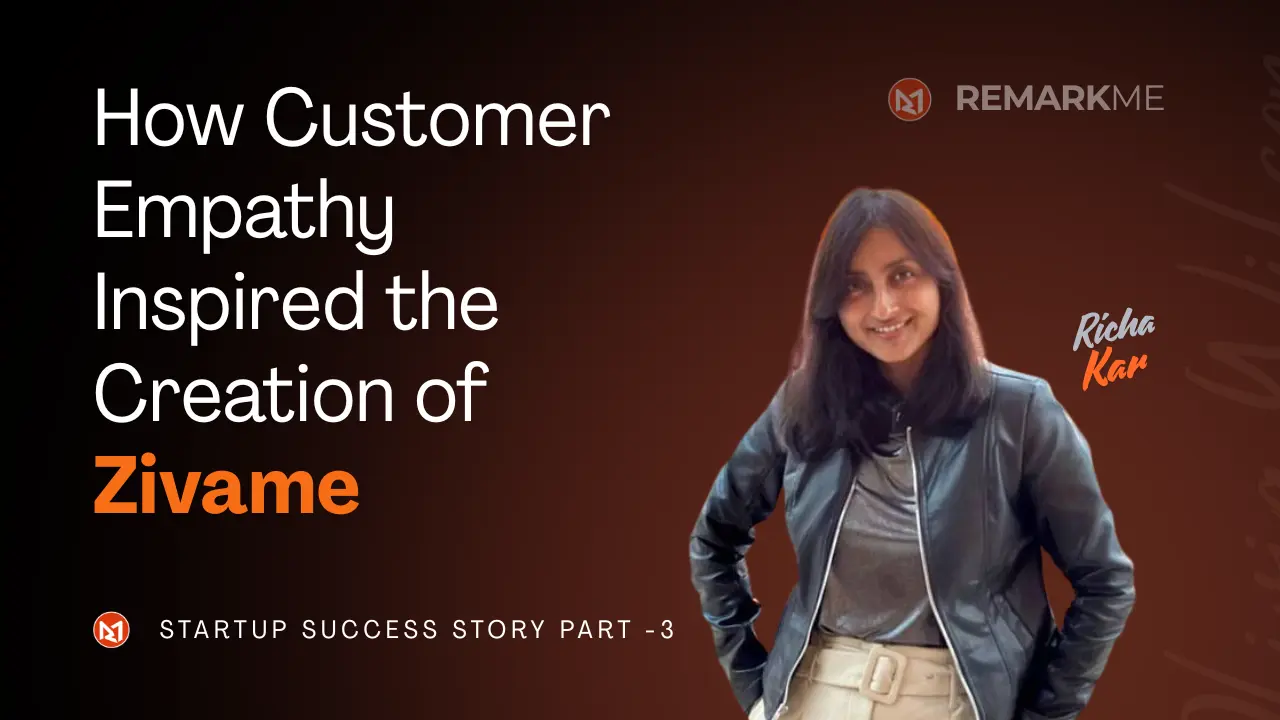
Securing institutional funding was an important milestone for Zivame, but Richa Kar understood that investment alone could never guarantee long-term success. Raising capital had given the company an opportunity to grow, yet it had also created a new set of expectations. Customers wanted a better shopping experience, employees expected clear leadership, and investors looked for sustainable business growth rather than short-term excitement.
For many startups, the journey becomes more difficult after the first funding round. Building an innovative product is one challenge, but transforming that product into a trusted national brand requires an entirely different level of execution. Every decision begins to influence not only revenue but also reputation.
Richa believed that the company’s future would not be determined by how quickly it expanded. Instead, it would depend on whether Zivame could continue solving customer problems better than anyone else while scaling responsibly.
As the customer base continued to grow, Zivame gained access to something far more valuable than sales figures. Every order, product review, customer support interaction, and sizing query revealed how women were actually shopping for intimate wear.
Instead of treating this information as routine business data, the team used it to understand customer behaviour at a much deeper level. They discovered that many women were still uncertain about selecting the right size, while others wanted greater variety than traditional retail stores could offer. Some preferred fashionable designs, whereas others prioritised comfort for everyday use.
These insights shaped product development, website improvements, and customer education. Rather than assuming what customers wanted, Zivame allowed its users to influence the direction of the business.
That willingness to listen became one of the company’s strongest competitive advantages.
From the very beginning, Richa Kar had believed that Zivame’s purpose extended beyond selling products. As the business matured, that philosophy became even more important.
The company invested heavily in educational content that helped women understand bra sizing, product types, fabric choices, and proper fit. Buying guides and detailed product descriptions reduced uncertainty, while personalised recommendations made online shopping feel more approachable.
This educational approach achieved something that traditional marketing alone could not accomplish. It built trust.
Customers no longer viewed Zivame as simply another e-commerce website. Increasingly, they saw it as a reliable destination where they could learn, explore, and make informed purchasing decisions without embarrassment.
In a category built on confidence and comfort, trust became the company’s most valuable asset.
As demand increased, another opportunity began to emerge.
Selling products from established brands helped attract customers, but it also limited the company’s ability to differentiate itself. Every retailer could offer similar products, making price competition increasingly difficult.
Richa and her team recognised that long-term success required something unique.
The company gradually expanded its portfolio by introducing private-label products designed around customer preferences and insights gathered from years of shopping behaviour. Instead of depending entirely on external manufacturers, Zivame began creating collections that reflected the needs of Indian women more accurately.
Private labels offered greater control over quality, pricing, and innovation. More importantly, they allowed the company to strengthen its own identity rather than simply acting as an online marketplace.
It was a strategic shift that would play a significant role in the company’s evolution.
As customer relationships deepened, the team realised something important.
Women who trusted Zivame for lingerie were also looking for other products related to comfort, confidence, and everyday lifestyle. Limiting the business to a single category meant ignoring opportunities that naturally aligned with customer expectations.
Rather than expanding into unrelated segments, the company introduced carefully selected categories such as sleepwear, activewear, shapewear, and loungewear. Each addition reflected the same philosophy that had inspired the company’s founding—solve genuine customer needs rather than chase temporary trends.
This thoughtful expansion helped increase customer loyalty while encouraging repeat purchases.
Instead of becoming known only for lingerie, Zivame gradually positioned itself as a broader women’s intimate wear and lifestyle brand.
Although online shopping continued to grow rapidly across India, Richa understood that not every customer felt equally comfortable purchasing intimate wear through a screen.
Many women still wanted professional fitting advice before making a purchase. Others preferred touching fabrics or understanding product differences in person before placing their trust in a brand.
Most entrepreneurs would have viewed physical stores as competition to an online business.
Richa saw them as an extension of the customer experience.
This thinking led to one of Zivame’s boldest strategic decisions.
The company began introducing exclusive retail outlets and Fit Studios designed specifically around women’s comfort and privacy. These locations were very different from traditional lingerie stores.
Instead of creating a hurried shopping environment, the stores focused on personalised fitting consultations, expert guidance, and customer education. Women could receive professional assistance without feeling uncomfortable or pressured.
Importantly, the offline experience complemented the online platform rather than replacing it.
Customers could explore products in stores, learn their correct sizes, and continue shopping digitally whenever they wished. Likewise, online shoppers gained confidence knowing that physical support was available whenever required.
Today this strategy is commonly described as omnichannel retail.
At the time, however, it demonstrated that customer convenience mattered more than limiting the business to a single sales channel.
Rapid expansion often causes startups to lose sight of the problem they originally set out to solve.
As Zivame grew, maintaining its customer-first culture became increasingly challenging. The organisation expanded its workforce, introduced new processes, and entered additional cities. Every stage of growth added operational complexity.
Yet Richa consistently reminded her team that success depended on preserving the company’s original purpose.
The mission had never been to become India’s largest lingerie retailer.
The mission was to help women feel confident while shopping for intimate wear.
Every product launch, marketing campaign, and customer interaction was expected to reinforce that purpose.
Maintaining clarity of mission allowed the company to grow without losing the identity that had attracted its earliest customers.
Success rarely goes unnoticed.
As India’s digital commerce ecosystem matured, more businesses recognised the potential of women’s intimate wear. Established fashion retailers expanded their collections, while emerging direct-to-consumer brands introduced innovative products targeting similar customer segments.
The competitive landscape changed rapidly.
Businesses that had once ignored the category now invested heavily in marketing, technology, and customer acquisition.
For Zivame, this shift represented both validation and challenge.
The company had proven that the market existed, but remaining a leader required constant innovation.
Simply being the first was no longer enough.
Every improvement had to strengthen customer loyalty before competitors could replicate it.
One of the greatest misconceptions about entrepreneurship is that growth automatically makes leadership easier.
In reality, success often increases complexity.
Decisions that once involved a handful of employees now affected hundreds. Strategic planning became more sophisticated, recruitment required greater discipline, and maintaining company culture demanded continuous attention.
Richa’s role also evolved.
Instead of focusing only on launching products or solving operational problems, she increasingly concentrated on building leadership teams capable of guiding the organisation through its next stage of growth.
The startup was slowly transforming into a large consumer business.
Leading that transformation required a different mindset from the one that had launched the company years earlier.
By the middle of the decade, Zivame had achieved something remarkable.
It had transformed a category that many believed could never succeed online into one of India’s fastest-growing consumer businesses. Customers trusted the brand, investors supported its vision, and competitors had begun recognising its influence.
Yet every milestone introduced new questions.
How could the company continue scaling without compromising quality?
Could leadership evolve as quickly as the business itself?
Would the strategies that worked during the startup phase remain effective as the organisation matured?
Those questions would shape the next phase of Zivame’s journey.
The challenges ahead would no longer revolve around proving that the business deserved to exist. Instead, they would focus on ensuring that the company could sustain its leadership while adapting to an increasingly competitive market.
That transition would become one of the most defining periods in Zivame’s remarkable story.
By the time Zivame had established itself as one of India’s leading intimate wear brands, the company had already achieved what many startups only dream of. It had built a loyal customer base, earned the confidence of investors, and created a category that many industry experts once believed would never succeed online.
Yet Richa Kar understood an important truth about entrepreneurship. The strategies that help a startup survive are rarely the same strategies that help it become a lasting business.
During the early years, every decision was centred on proving that the idea worked. As the company expanded, the focus shifted toward building systems, strengthening operations, and preparing the organisation for sustainable growth over the long term.
Success had changed the questions the leadership team needed to answer.
The challenge was no longer whether customers would buy lingerie online. The challenge was how to continue leading a rapidly evolving market.
As startups grow, founders often discover that they must transform themselves before they can transform their organisations.
In Zivame’s earliest days, Richa was involved in almost every important decision. She worked closely on product selection, partnerships, customer experience, hiring, fundraising, and business strategy. That hands-on approach was essential while building the company from scratch.
However, as the organisation expanded across multiple functions, cities, and product categories, leadership became less about making every decision personally and more about building capable teams that could make excellent decisions independently.
Delegation was no longer optional.
It became essential.
One of the biggest lessons of entrepreneurship is recognising that sustainable businesses are built by strong teams rather than extraordinary individuals.
Richa embraced this evolution by strengthening the leadership structure and bringing experienced professionals into key operational roles.
When Zivame first entered the market, the company enjoyed the advantage of being an early mover.
As digital commerce accelerated across India, that advantage gradually became smaller.
Established fashion brands expanded their online presence, new direct-to-consumer companies entered the intimate wear category, and global brands became increasingly active in the Indian market. Customer expectations also continued to rise as consumers became accustomed to faster deliveries, personalised recommendations, and seamless shopping experiences.
The market that once lacked innovation had become highly competitive.
Instead of responding with panic, Zivame focused on improving areas that competitors could not easily replicate.
Years of customer data helped the company understand purchasing behaviour more deeply. Continuous investment in product quality strengthened customer confidence, while educational content and professional fitting guidance continued reinforcing the brand’s credibility.
Competition reminded the team that leadership is earned repeatedly.
It cannot be protected by history alone.
One misconception about successful startups is that a single great idea is enough to guarantee long-term success.
Richa believed otherwise.
Every year brought changing fashion preferences, evolving customer expectations, and new technological possibilities. Remaining relevant required constant experimentation and continuous improvement rather than relying on past achievements.
The company refined its product portfolio, improved digital experiences, strengthened its supply chain, and expanded its omnichannel presence to create a smoother shopping journey for customers.
Many of these improvements attracted little public attention.
Collectively, however, they strengthened the company’s ability to compete in an increasingly demanding marketplace.
Innovation at Zivame was no longer a single breakthrough.
It had become part of the company’s culture.
One of the most difficult decisions any founder faces is recognising when the organisation requires a different style of leadership.
Building a startup and scaling a mature business demand different strengths. Founders are often exceptional visionaries who thrive amid uncertainty, while larger organisations also require experienced operational leadership capable of managing complexity.
As Zivame entered a new phase of growth, Richa gradually stepped back from day-to-day operational responsibilities while continuing to support the company’s broader vision.
This decision surprised many observers.
Some interpreted it as a sign of difficulty.
In reality, it reflected an understanding shared by many successful entrepreneurs: the long-term health of a company should always take priority over personal titles.
Strong founders build organisations that can thrive beyond themselves.
That willingness to evolve demonstrated leadership in its most mature form.
Although headlines often focus on revenue, funding, and valuations, Zivame’s influence extended beyond financial performance.
Before the company’s arrival, lingerie shopping in India remained surrounded by hesitation and limited consumer awareness. Through years of education, better product accessibility, and customer-first experiences, Zivame helped normalise conversations around sizing, comfort, and women’s wellness.
The company encouraged women to make informed purchasing decisions instead of settling for limited options.
In doing so, it changed not only shopping habits but also consumer expectations.
Many businesses that entered the category later benefited from the awareness that Zivame had spent years creating.
Changing an industry often means creating opportunities that competitors eventually share.
That is one of the clearest signs of meaningful innovation.
Entrepreneurship is rarely a journey of uninterrupted victories.
Every phase of Zivame’s expansion demanded difficult trade-offs.
Resources had to be allocated carefully.
Hiring decisions carried greater consequences.
Technology investments required long-term thinking.
Balancing rapid expansion with operational discipline became a constant challenge.
There were moments when the company needed to adapt its strategies to changing market conditions while remaining faithful to its original mission.
These decisions were not always visible to customers.
They were made quietly inside meeting rooms where leadership weighed short-term pressures against long-term sustainability.
Such moments define the character of enduring businesses far more than headline-making funding announcements.
Years of disciplined execution had transformed Zivame from an ambitious startup into one of India’s most recognised intimate wear brands.
Its digital platform had evolved into an omnichannel business supported by physical stores, trusted educational content, expanding private labels, and a loyal customer community.
The company’s achievements attracted attention across the retail industry because they demonstrated that even categories considered culturally sensitive could become mainstream when businesses genuinely understood customer needs.
As India’s organised retail sector continued evolving, Zivame had positioned itself as an attractive strategic brand with strong customer recognition and deep category expertise.
The next chapter of its journey would no longer be defined solely by startup growth.
It would involve becoming part of a much larger retail ecosystem capable of taking the brand to millions of additional consumers across the country.
The third chapter of Zivame’s journey reminds aspiring entrepreneurs that building a successful startup is not a single achievement.
It is a continuous process of learning, adapting, and reinventing.
Richa Kar demonstrated that founders must evolve alongside their companies. The skills required to launch an idea are different from those needed to scale a business, build leadership teams, and create a lasting organisation.
Perhaps the most valuable lesson is that sustainable success belongs to founders who remain committed to solving customer problems long after the excitement of launching a startup has faded.
Markets change.
Competitors emerge.
Technology evolves.
Customer expectations continue rising.
Businesses that survive these changes are those that never stop learning.
That philosophy became one of the defining characteristics of Zivame’s remarkable journey.
By now, Zivame had transformed from an ambitious startup into a trusted consumer brand that had reshaped India’s intimate wear industry.
Yet every successful company eventually enters another defining chapter.
In Part 4, we’ll explore how Zivame navigated changing market dynamics, its journey toward becoming part of Reliance Retail, the brand’s continued evolution under new ownership, and the lasting entrepreneurial lessons that aspiring founders can apply to build businesses with enduring impact.
We’ll also reflect on Richa Kar’s legacy and examine why Zivame remains one of the most influential startup stories in India’s direct-to-consumer ecosystem.